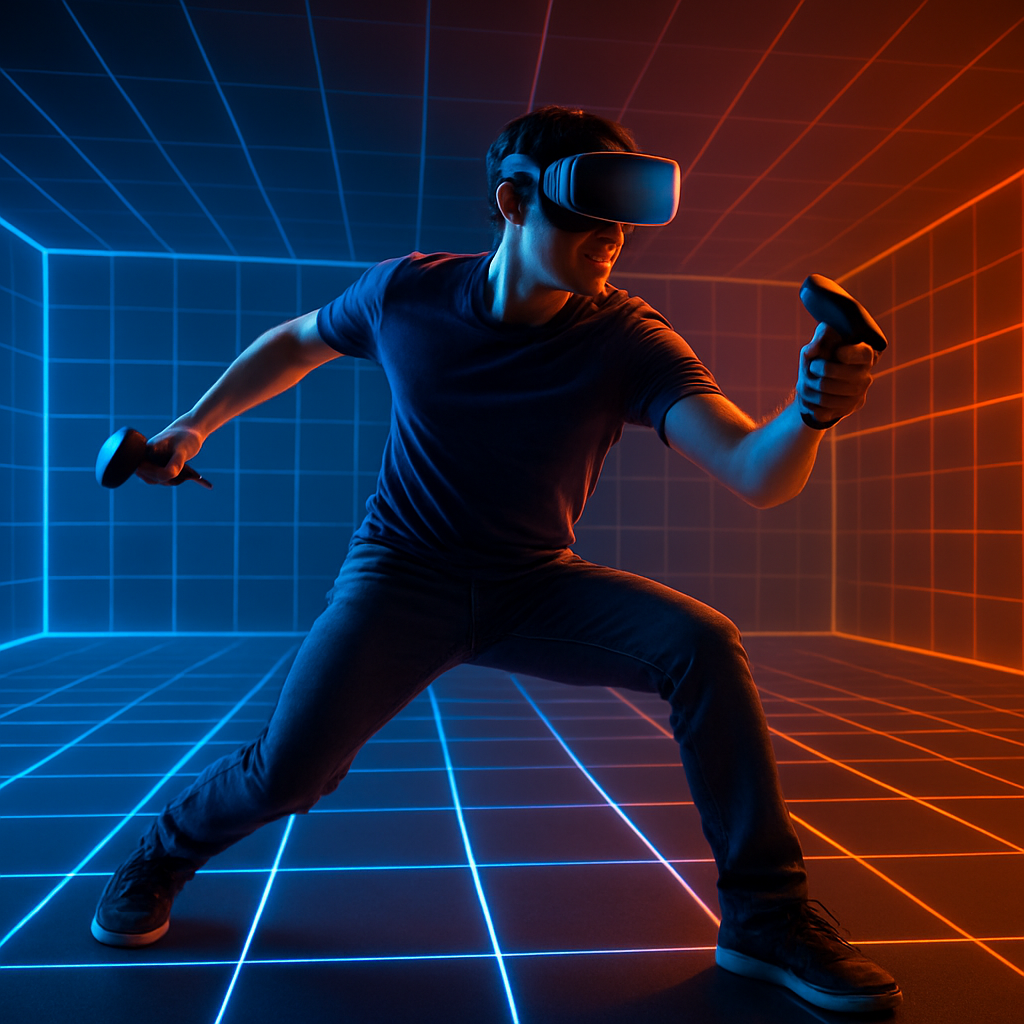
In competitive VR gaming, how you move is as important as how fast you think. The best players combine physical efficiency with spatial intelligence, creating a style of play that looks effortless but is built on hours of deliberate practice.
Understanding Locomotion Types
Modern VR titles offer several movement systems. Teleportation is simple but telegraphs your position to opponents. Smooth locomotion feels more natural but requires a stronger sense of orientation. Arm-swing locomotion mimics natural running and is favoured in competitive circles for its blend of authenticity and low latency.
Train across all locomotion types until each feels instinctive. Switching between them during a match based on context is a hallmark of elite players.
Footwork and Body Positioning
Unlike traditional gaming, VR competitive play involves your entire body. Your physical stance directly affects your in-game avatar's hitbox and movement efficiency. Developing a low, stable base reduces fatigue and improves reaction time.
Key principles:
- Keep your knees slightly bent to absorb sudden movement changes
- Rotate your torso rather than stepping to extend reach without losing position
- Use your non-dominant hand to shield and bait while your dominant hand strikes
Spatial Memory
Top players build a mental map of every arena. They know sight lines, choke points, power-up locations, and the timing cycles of every element in a map. Developing spatial memory takes repetition. Play the same maps until your navigation is automatic, freeing your attention for reading opponents.
Reading Opponents
In VR, opponent movement is highly readable. Micro-adjustments in head position before an attack, subtle shifts in controller angle, and breathing patterns all communicate intent. Train yourself to watch for these signals by reviewing replays and drilling against experienced sparring partners.
Drill Recommendations
- Target tracking drills: 10 minutes daily with a dedicated aim trainer
- Footwork patterns: practice lateral shuffles and pivot turns for 5 minutes before each session
- Map memory runs: navigate arenas blindfolded using only spatial memory to reach checkpoints
Consistent application of these fundamentals will accelerate your competitive development faster than any individual technique in isolation.