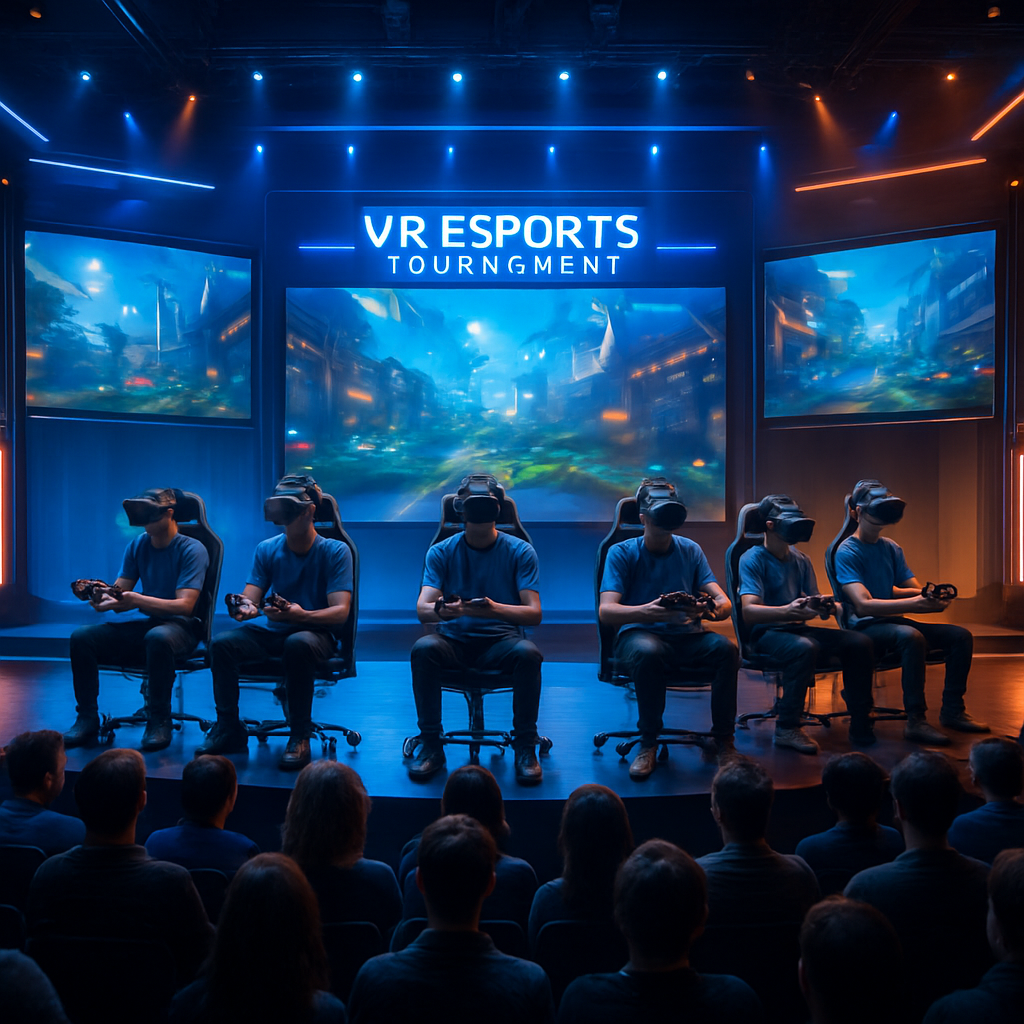
Solo VR gaming is deeply personal. Team VR gaming is something else entirely — a shared physical and cognitive experience where five individuals must function as a single organism. Building genuine team coordination in VR requires structural approaches that go beyond simply playing matches together.
Role Clarity
Every competitive VR team benefits from defined roles. A common structure allocates players to offensive, defensive, support, and scout functions, with a fifth player in a flexible capacity. Roles should be assigned based on individual strength profiles rather than preference, and practiced consistently enough that each player executes their responsibilities automatically.
Role clarity reduces cognitive load. When every player knows exactly what they are responsible for, collective decision-making accelerates and communication becomes more efficient.
Communication Protocols
In-match communication should be concise, specific, and actionable. Develop a shared vocabulary for common situations: callouts for enemy positions, signals for coordinated attacks, and confirmation words for receiving and acknowledging instructions.
Effective communication principles:
- State the subject before the information: "Left flank — two incoming"
- Confirm instructions rather than assuming receipt
- Limit chatter during peak action periods; save analysis for pauses
Synchronised Movement
The highest expression of team coordination in VR is synchronised movement — multiple players executing manoeuvres simultaneously without explicit real-time communication. This emerges from extensive practice of planned scenarios. Teams that drill set plays develop the muscle memory and mutual understanding required to execute them automatically.
Building Team Chemistry
Chemistry between players develops through shared experience, both in and out of competitive sessions. Regular review sessions, social activities, and transparent feedback processes build the psychological safety required for players to communicate honestly under pressure.
Teams that debrief after every session — identifying what worked, what failed, and what to adjust — improve at a measurably faster rate than those who simply accumulate playing time without structured reflection.
Training Recommendations
- Weekly scrimmage sessions against teams of similar or higher skill
- Bi-weekly review sessions analysing recorded match footage
- Monthly role rotation exercises to build mutual understanding
- Regular one-on-one pairing drills between specific role combinations
Team VR gaming at its best is a demanding, rewarding discipline that requires as much investment in collective intelligence as in individual skill. The teams that commit to building it systematically are invariably the ones that win.